Can Gen Z Afford to Buy Property in the UK? A Generational Comparison
· 11 min read
Gen Z are the most ambitious first-time buyers in a generation — but also face the toughest market. This article compares homeownership rates, affordability, and where each generation wants to live across the UK.
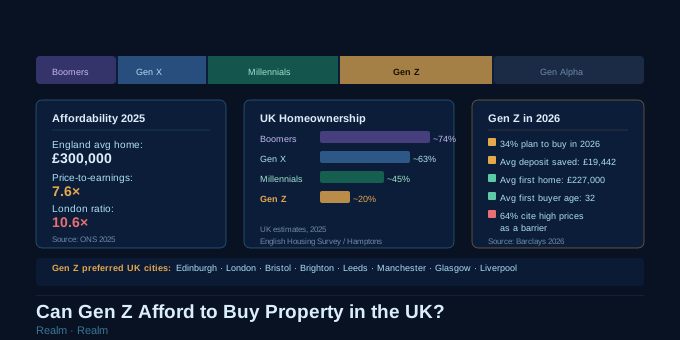
Every generation thinks it has it harder than the one before. When it comes to buying property in the UK, the data suggests that for Gen Z and Millennials, that feeling is largely justified. The relationship between wages, house prices, and the cost of borrowing has shifted so dramatically over the past forty years that the experience of getting on the property ladder in 2026 bears almost no resemblance to what Baby Boomers faced in the 1970s and 1980s.
But the picture is not all doom. Gen Z is saving harder than expected, confidence is rising, and the definition of where — and how — young people want to live is changing. Understanding the generational divide in UK property is not just interesting sociology; it has direct implications for where prices are heading, which markets are growing, and what the next decade of property looks like.
1. Defining the Generations
Before diving into the numbers, it is worth pinning down the generations we are talking about:
- Baby Boomers — born approximately 1946–1964, now aged 61–79
- Generation X — born approximately 1965–1980, now aged 45–60
- Millennials — born approximately 1981–1996, now aged 29–44
- Generation Z — born approximately 1997–2012, now aged 13–28 (the eldest Gen Zers are entering their late twenties and early thirties)
- Generation Alpha — born 2013 onwards, not yet in the housing market
For the purposes of property, the most relevant groups are Gen Z — now approaching peak first-time buyer age — and Millennials, who spent their twenties and early thirties locked out of a market that moved faster than their wages.
2. Homeownership by Generation — The Widening Gap
The most striking data point in the generational property story is not how much houses cost — it is how few young people own them.
According to Leeds Building Society research, homeownership has fallen by a third among young people in recent decades. The English Housing Survey and analysis from Hamptons and the Resolution Foundation paint a consistent picture: each successive generation is reaching middle age with a lower homeownership rate than the one before it.
Baby Boomers entered a market where affordability, while not trivial, was manageable on a single average wage. Generation X benefited from rising values but also faced the aftermath of the early 1990s recession. Millennials, as we will examine, were hit hardest by the combination of the 2008 financial crisis, a decade of stagnant wages, and soaring house prices.
Millennials spent £36.9 billion on rent in 2023 alone, reversing the modest gains in homeownership that the generation had made between 2016 and 2020. And around 36% of renters in the UK are now Generation Z — young people who, as they dedicate more of their income to rent, find it increasingly difficult to save enough for a deposit.
3. What Each Generation Actually Paid
The generational gap goes beyond price tags. Hamptons research lays bare just how differently the mortgage burden has fallen across generations.
A Baby Boomer who bought their first home in 1979 paid a total of £93,943 in mortgage payments (adjusted to 2025 prices) over the first fifteen years of their loan, and paid off around 60% of their mortgage in that period. A Millennial buying in 2011 paid £117,509 over the same relative period — but only paid off 39% of their loan, because a larger proportion of early payments went on interest rather than capital.
For Gen Z, the situation is significantly worse. The average Gen Z buyer will pay £191,029 in the first half of a 30-year mortgage — more than double the inflation-adjusted figure for Baby Boomers. This reflects exposure to both high house prices and high interest rates simultaneously, a combination no previous generation has faced to the same degree.
There is also the question of capital growth. A Gen Z or older Millennial buyer who purchased their home in 2020 will be the first generation to see house prices fall in real terms during their first five years of ownership. While nominal prices rose 27% between 2020 and 2025, once inflation is factored in, that represents a real-terms fall of 3% — a stark contrast to the Silent Generation, who saw property values more than double in real terms in their first five years of ownership.
4. How Much Can You Afford on a UK Salary in 2026?
Understanding how much property you can realistically buy requires anchoring to actual wages and lending norms.
In 2025, the median average home in England cost £300,000 — 7.6 times the median annual full-time earnings of £39,300. In Wales, the ratio was 6.0 times against median earnings of £35,800. Affordability has been improving since its peak in 2021, as average earnings have grown by 25% while house prices rose just 5% — but the ratio remains historically high.
In practical lending terms, a good mortgage-to-salary ratio in the UK is generally considered to be around 4 to 4.5 times annual income. A single applicant earning £50,000 would typically qualify for a mortgage of up to £225,000 — still well short of the England average house price.
The geographic variation is extreme. The house price-to-earnings ratio is most acute in London, where it reaches around 10.6 times salary. Housing in the North of England, Scotland, and Northern Ireland is considerably more affordable in relative terms. In Bath, a single buyer on an average salary would need to borrow an extraordinary 15.5 times their income to purchase at the local average price. Even for couples, the ratio stands at 7.7 times.
One positive signal: data from Lloyds Banking Group shows the price of a typical first home is now 5.9 times the average first-time buyer's salary — down from 6.2 at the end of 2024 and the lowest ratio since 2015, driven by a combination of lower interest rates, faster wage growth, and modest house price growth.
5. Gen Z: Ambitious, Saving Hard — But Facing the Toughest Odds
The Gen Z property story is more nuanced than headlines suggest. The generation is not disengaged from homeownership — quite the opposite.
A third of Gen Z adults (34%) hope to purchase a new or first home in 2026, more than double the national average of 16%. Confidence in the housing market among 18–34 year olds improved from 33% in January 2025 to 40% by December, even as affordability pressures remain intense.
Gen Z savers report having accrued an average of £19,442 towards a deposit, excluding financial assistance or inheritance, and expect to add a further £8,998 throughout 2026. Nearly six in ten Gen Z buyers planning to purchase in 2026 say they have already saved what they consider a significant amount.
The barriers are real, however. Nearly two-thirds of young prospective buyers cite high house prices as a challenge, while 61% say mortgage rates now have a bigger impact on affordability than prices themselves — a shift from previous years when the deposit hurdle dominated.
The average age of a first-time buyer in the UK is now 34, and the average asking price of a first-time buyer home stands at approximately £227,000. Compare that to the Baby Boomer generation, who might have bought their first home for around £4,000 in nominal terms — the equivalent of roughly £64,000 in today's money. The structural shift in what first-time buyers must spend is not a matter of degree; it is a different order of magnitude entirely.
6. Millennials: The Lost Decade — and a Slow Recovery
Millennials have had, by most measures, the worst deal of any post-war generation when it comes to property.
The oldest Millennials entered the workforce during the dot-com recession of the early 2000s. The core of the generation was starting careers and attempting to save deposits when the 2008 financial crisis hit, wiping out savings, suppressing wages, and dramatically tightening mortgage lending criteria. By the time the market recovered, prices had moved further out of reach.
The share of income that young people aged 25 to 34 spent on housing fell from 27% in 2015–16 to 22% in 2022–23, suggesting some improvement in headline affordability. However, the share experiencing housing stress — spending over 30% of their income on housing — remained concentrated among lower-income households and those living in London. Across the UK, 24% of young people experienced housing stress, rising to 53% of low-income families and 43% of people in London.
The Millennial experience has not been uniform. Those who managed to buy before 2015 — often with parental help — benefited from strong price growth in many regions. Those who could not are now approaching their late thirties and early forties still renting, with the deposit gap having grown alongside prices over the past decade.
Over the coming decade, a great wealth transfer is expected to take place, with as much as £5.5 trillion in financial assets set to pass from Baby Boomers to Millennials and Gen Z. As this wealth is handed down, much of it is expected to flow into property purchases — potentially reshaping the market significantly for both generations.
7. Where Does Each Generation Want to Live?
Generational differences in property are not just about what people can afford — they are also about what they want. And here, the gap between generations is telling.
Baby Boomers and older Gen Xers have largely followed the traditional arc: start in a city, move to suburbs or commuter towns as families grow, eventually seek space and greenery. The desire for a detached house with a garden in a quiet town has defined UK property development for fifty years.
Gen Z is different. According to Time Out's 2025 ranking based on Gen Z responses, the best UK cities for Gen Z are Edinburgh in first place, followed by London, Brighton, Bristol, Glasgow, Belfast, Leeds, Liverpool, Manchester, and Cardiff. The pattern is clear: Gen Z gravitates towards cities with strong cultural scenes, walkability, diversity, and nightlife — not suburbs.
This urban preference has direct implications for prices. The cities Gen Z most desires — Edinburgh, London, Bristol, Brighton — are also among the most expensive in the UK, creating a tension between aspiration and affordability. The practical response for many Gen Z buyers is to look at affordable pockets within those cities, or at alternative cities with similar cultural energy but lower price points — Leeds and Manchester being the most prominent examples.
What Gen Z also values, increasingly, is quality of the home environment itself: energy efficiency, good broadband, proximity to green space, and walkable amenities. Demand among first-time buyers has remained consistently concentrated at the more affordable end of the market, with homes priced under £300,000 making up 72% of first-time buyer purchases in May 2025.
8. The Bank of Mum and Dad — and the Great Wealth Transfer
No article about generational property can ignore the role of family money.
The Bank of Mum and Dad remains influential, supporting around a third (34%) of recent Gen Z buyers. However, perceptions around the necessity of this support are easing: at the start of 2025, almost two-thirds of Gen Z said inheritance or financial assistance was essential to buying; by late 2025, that had fallen to 43%.
This shift may partly reflect improving mortgage availability and the growth of higher loan-to-value products, which allow buyers to purchase with smaller deposits. Deposits below £20,000 accounted for more than a fifth of first-time buyer purchases in December 2025, up from just 13% a year earlier — suggesting lenders are becoming more comfortable lending to buyers with limited savings.
But the wealth transfer dynamic will define the next decade of UK property more than almost any other factor. Baby Boomers hold the majority of the UK's property wealth. As that wealth passes to their children and grandchildren — the Millennials and Gen Z cohorts currently locked out or struggling — it will flow disproportionately into the housing market, concentrating homeownership further among those who receive it and deepening inequality between those who do not.
9. Is the Ladder Getting Easier to Climb?
There are genuine reasons for cautious optimism in 2026, particularly for Gen Z buyers.
Interest rates have come down from their 2023 peak. The Bank of England base rate sits at 3.75% — its lowest since spring 2023 — and further cuts are expected. Wage growth has outpaced house price growth for the past two years, improving the price-to-earnings ratio. Lenders are innovating with higher LTV products and longer mortgage terms. And a government committed — at least in rhetoric — to boosting housing supply is attempting to increase the stock of affordable homes.
None of this changes the structural reality overnight. A Gen Z buyer today will still pay more in real mortgage costs over the life of their loan than any previous generation. The cities they most want to live in remain among the most expensive in the country. And the deposit gap, while narrowing at the margins, is still a meaningful barrier for those without family support.
What has changed is attitude. Gen Z is not resigned to renting forever — it is saving, planning, and engaging with the market more actively than many expected. The data suggests a generation that understands the challenge clearly and is working around it, whether through buying in more affordable areas, going in with a partner earlier, or accepting a smaller first home to get a foothold.
The ladder is not easier. But a new generation is finding new ways to climb it.
Want to explore house price trends, transaction data, and affordability insights for any postcode sector in England and Wales? Start your free trial at signalsbi.com and generate your first property intelligence report today — no commitment required.
Frequently asked questions
Can Gen Z afford to buy a house in the UK?
It is harder for Gen Z than for previous generations, but not impossible. With the median English home at 7.6 times median earnings and the average first-time buyer aged 34, most Gen Z buyers rely on a combination of saving, higher loan-to-value mortgages, partnering up, and in many cases family assistance. A third of Gen Z still hope to buy in 2026.
What is the average age of a first-time buyer in the UK in 2026?
The average age of a first-time buyer in the UK is now around 34, with the average asking price of a first-time buyer home approximately £227,000.
How much can I borrow on a UK salary?
Most UK lenders offer mortgages of around 4 to 4.5 times annual income. A single applicant earning £50,000 would typically qualify for a mortgage of up to about £225,000, depending on credit and deposit.
Where does Gen Z want to live in the UK?
Time Out's 2025 ranking places Edinburgh first, followed by London, Brighton, Bristol, Glasgow, Belfast, Leeds, Liverpool, Manchester and Cardiff. Gen Z prefers walkable, culturally rich cities over suburbs.
What is the house price-to-earnings ratio in the UK?
In 2025 the median English home cost 7.6 times median full-time earnings. In London the ratio rises to about 10.6 times, while in Wales it sits at 6.0 times.